
Turning Food Waste into Sustainable Growth
A student-led circular waste initiative at Taylor's Residence.
What is REGrow?
REGrow was established at Taylor's Residence to address a growing operational and environmental challenge: the high volume of food waste generated within a dense student residential community. With over 1,000 residents living on campus, a significant proportion of daily waste consists of organic food waste that would typically be sent to landfill.
A Circular Sustainability Initiative
The initiative reflects a circular sustainability philosophy. "RE" represents renewal, reuse and regeneration, while "Grow" symbolises new life and sustainable growth. Through REGrow, food waste that would otherwise be discarded is transformed into valuable resources that support environmental restoration and community livelihoods.
The initiative was designed with three key objectives:
- Divert food waste from landfill through a practical circular waste management system.
- Empower residents to lead sustainability initiatives within the residential community.
- Translate global sustainability goals into practical everyday behaviours.
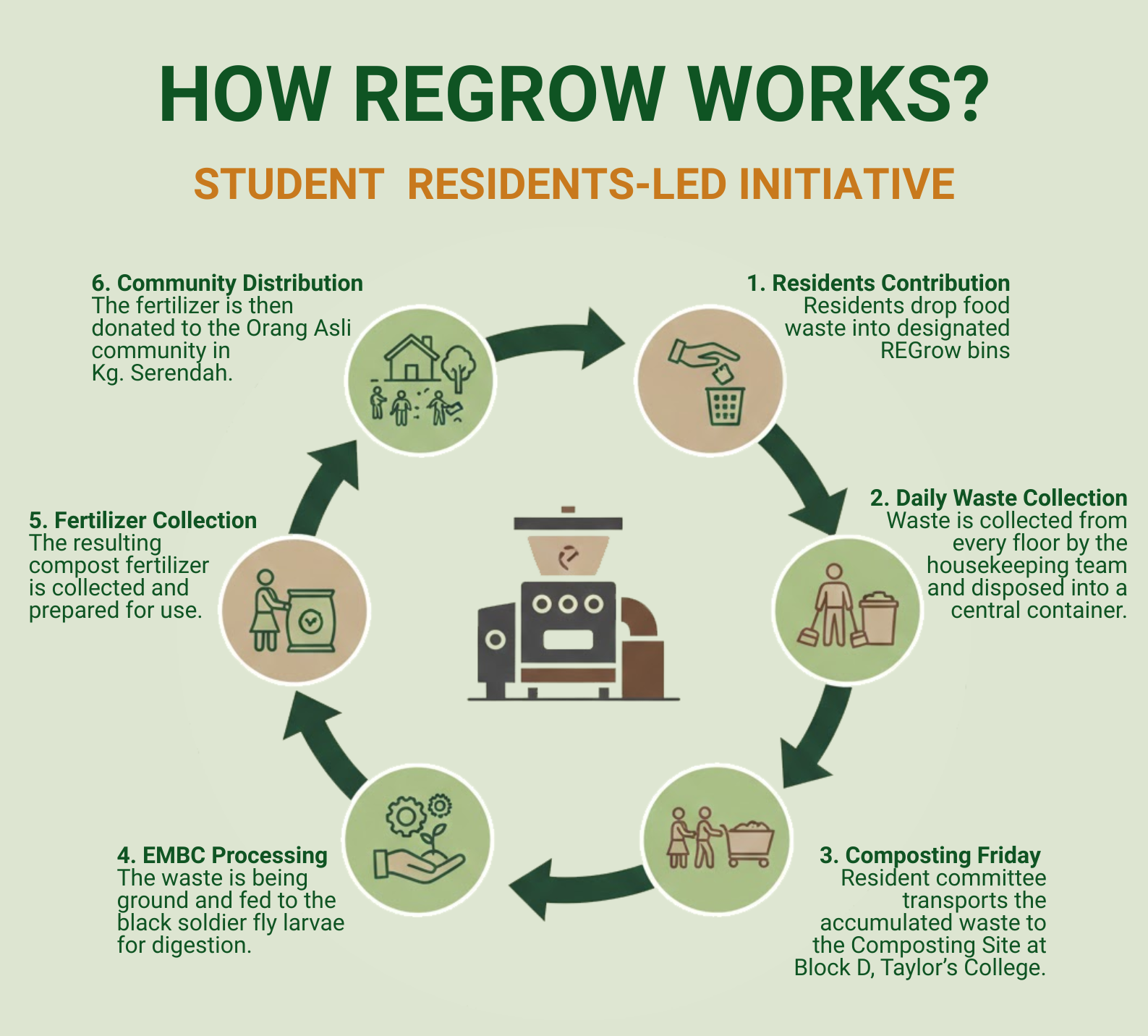
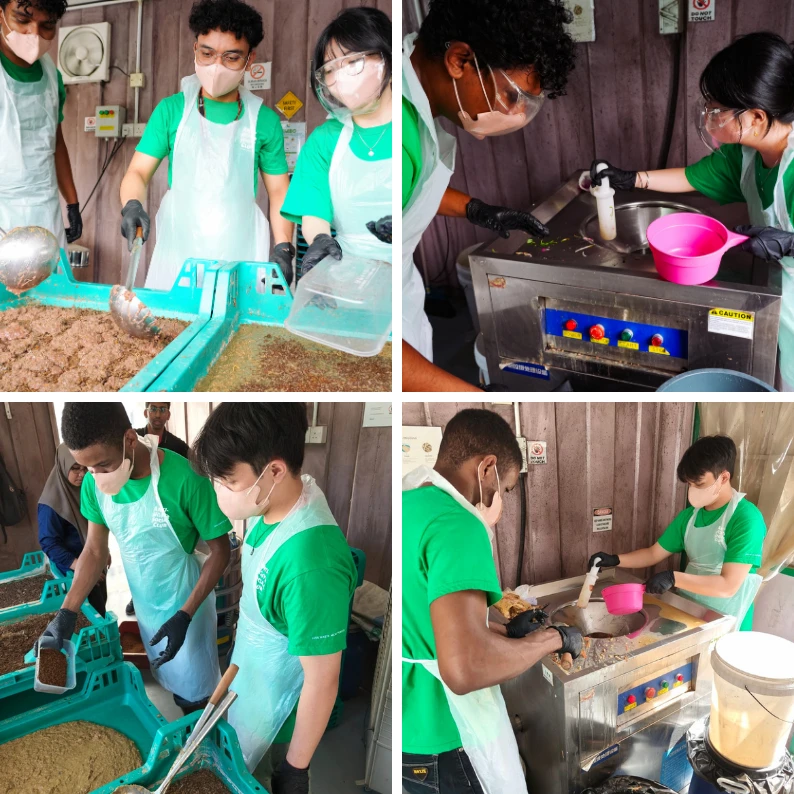
REGrow introduced a structured food waste diversion system across apartment pantries, communal kitchens and utility areas through dedicated waste separation bins. Residents deposit food scraps such as fruit peels, vegetable trimmings and leftovers into these bins. The residence cleaning team conducts scheduled collection before handing the waste to the student-led REGrow team, who manage sorting, weighing and recording to track environmental impact.
How It Works?
REGrow operates through a closed-loop bioconversion system that transforms food waste into valuable agricultural resources.
Our Environmental Impact
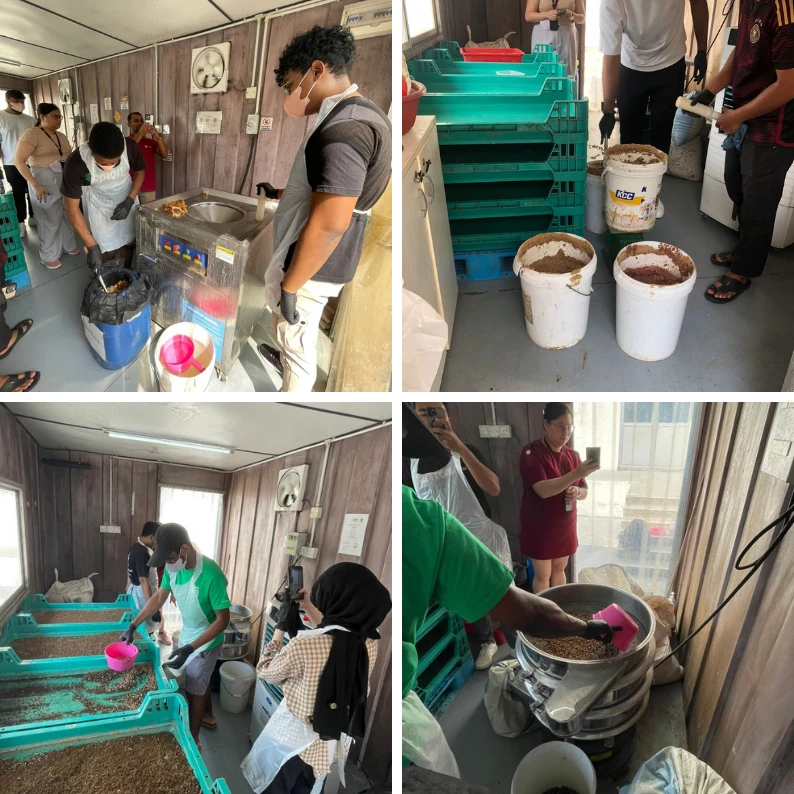
Collected food waste is processed through a bioconversion system using black soldier fly larvae, a natural and highly efficient method of breaking down organic waste. The larvae rapidly consume food waste and convert it into two valuable outputs: organic fertiliser (frass) and larvae biomass, signifcantly reducing waste volume while producing sustainable agricultural resources.
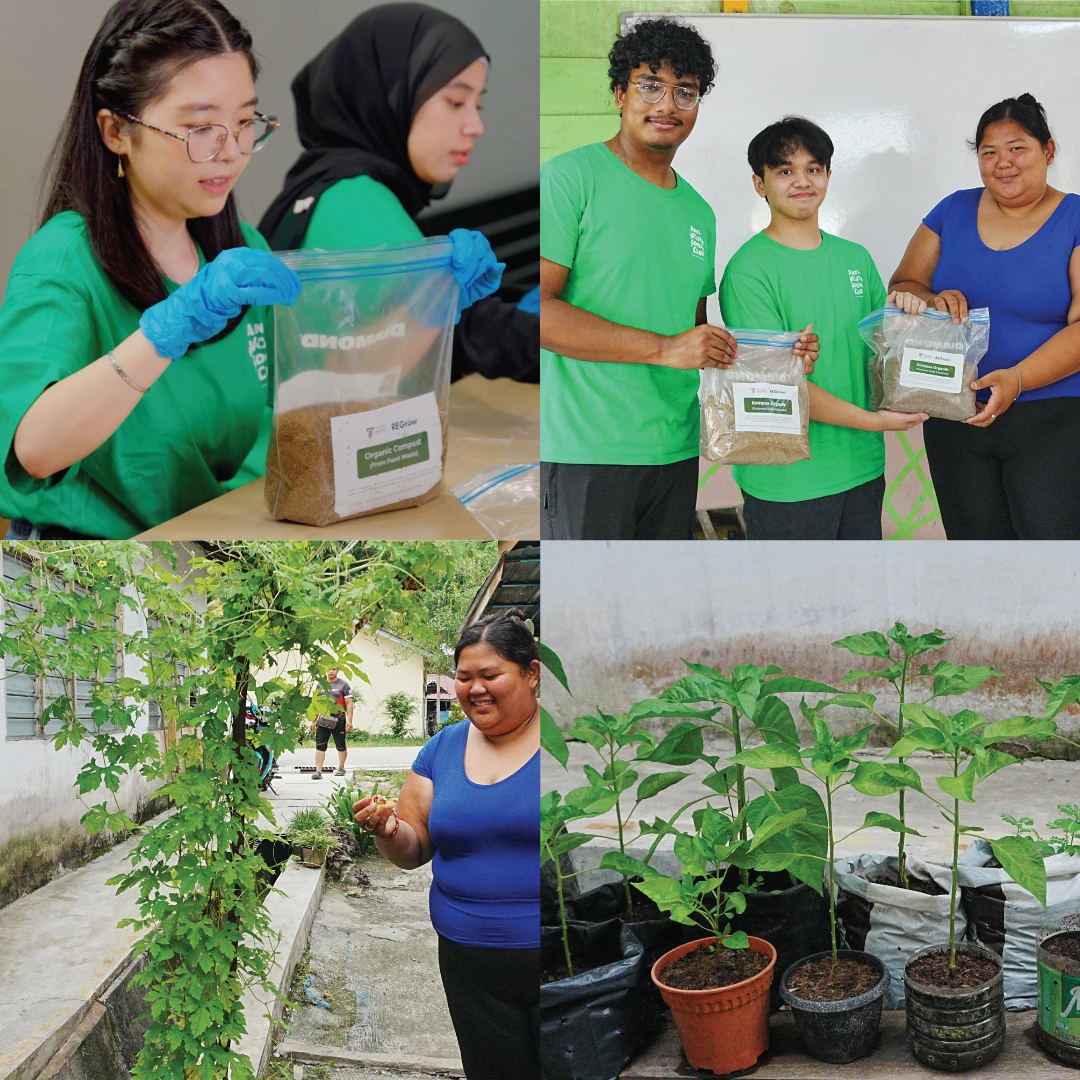
The organic fertiliser produced through REGrow is donated to Orang Asli indigenous communities in Malaysia to support small-scale farming and sustainable food production, creating a meaningful social impact beyond the campus.
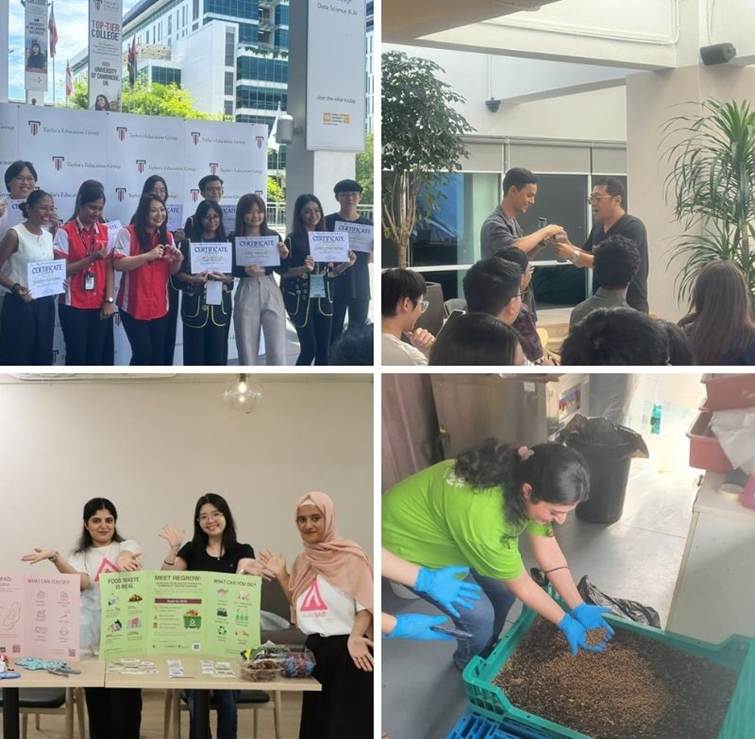
Beyond its environmental outcomes, REGrow serves as a resident leadership platform where students manage operations, monitor waste volumes and document impact. Through this hands-on experience, residents learn circular economy principles, sustainability management and environmental stewardship.
By embedding sustainability into everyday residential living, REGrow transforms daily waste practices into measurable climate action while cultivating environmentally responsible future leaders.
REGrow in Action
Why It Matters?
Environmental Impact
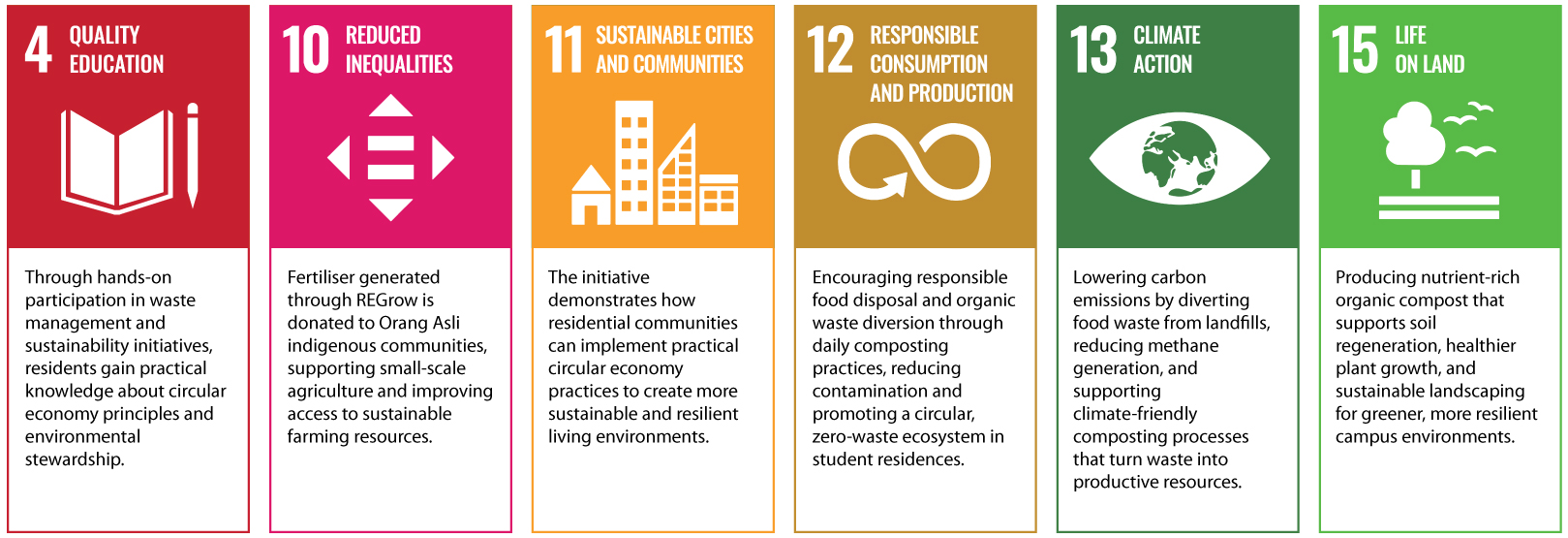
REGrow supports SDG 12 by diverting organic food waste from landfills through a circular waste management system. This helps reduce methane emissions, contributes to SDG 13 climate action, and the fertiliser produced supports SDG 15 life on land by improving soil health and promoting greener landscapes.
Community & Educational Impact
The initiative contributes to SDG 10 by donating fertiliser to Orang Asli indigenous communities. Through hands-on participation, residents gain practical sustainability knowledge, advancing SDG 11 sustainable cities and communities and SDG 4 quality education.
Aligned with the United Nations Sustainable Development Goals
Collaborative Partners
Through our collaboration with our partners, we aim to tackle food wastage in Malaysia, one step at a time

Awards & Recognition
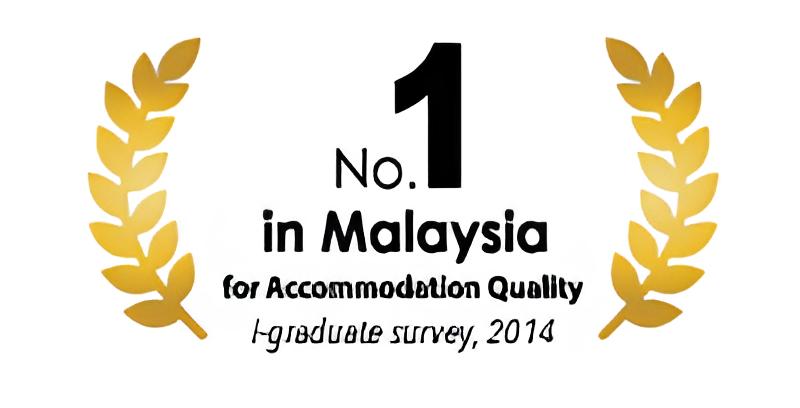
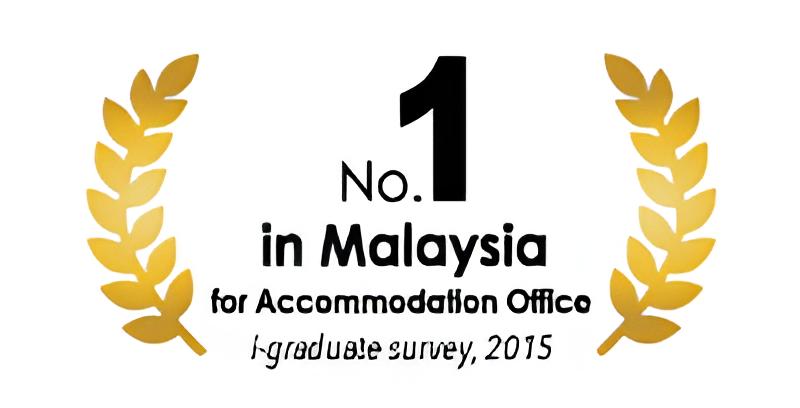
Taylor's Residence has transformed into an award-winning community builder, with a focus on imparting crucial life skills to its residents.